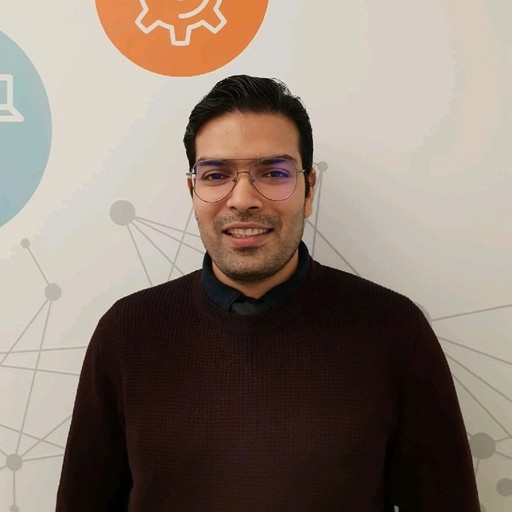
I build AI agents that do real engineering work — and the guardrails that make them safe to trust. Principal Software Engineer & Tech Lead at Autodesk · 14+ years across data & AI · Greater Montreal.
At Autodesk, I lead a team of 4 building the platform other teams use to create and run AI agents. The clearest example: more than 1,500 internal applications depended on legacy, vulnerability-prone APIs, spread across Python, Go, Java, Rails and Perl. We built an agent that migrated all of them to GraphQL, with over 85% success. The key design choice: the AI does the work inside a controlled environment, and deterministic checks decide what ships.
That's how I think about AI in engineering: let the model do the heavy lifting, but keep hard rules and humans in charge of quality. I also shape how my team builds with AI — one shared workflow from intent and design to ADRs, specs, implementation and docs, packaged as a plugin; monitoring for agents and MCP servers, with evals for output quality and Dynatrace (APM) for how they run in production; and coaching engineers on when to move fast (tactical) and when to slow down and design (strategic).
Our team has shipped 3 agents, 5 MCP servers and 2 IDE plugins used across Autodesk. I work closely with our Distinguished Architect on platform design, and I still write the code. Before AI, I spent a decade building data platforms — search at ~200K events/sec, pipelines over ~2 PB, and Databook's first semantic layer — which is why the agents I build sit on solid data.
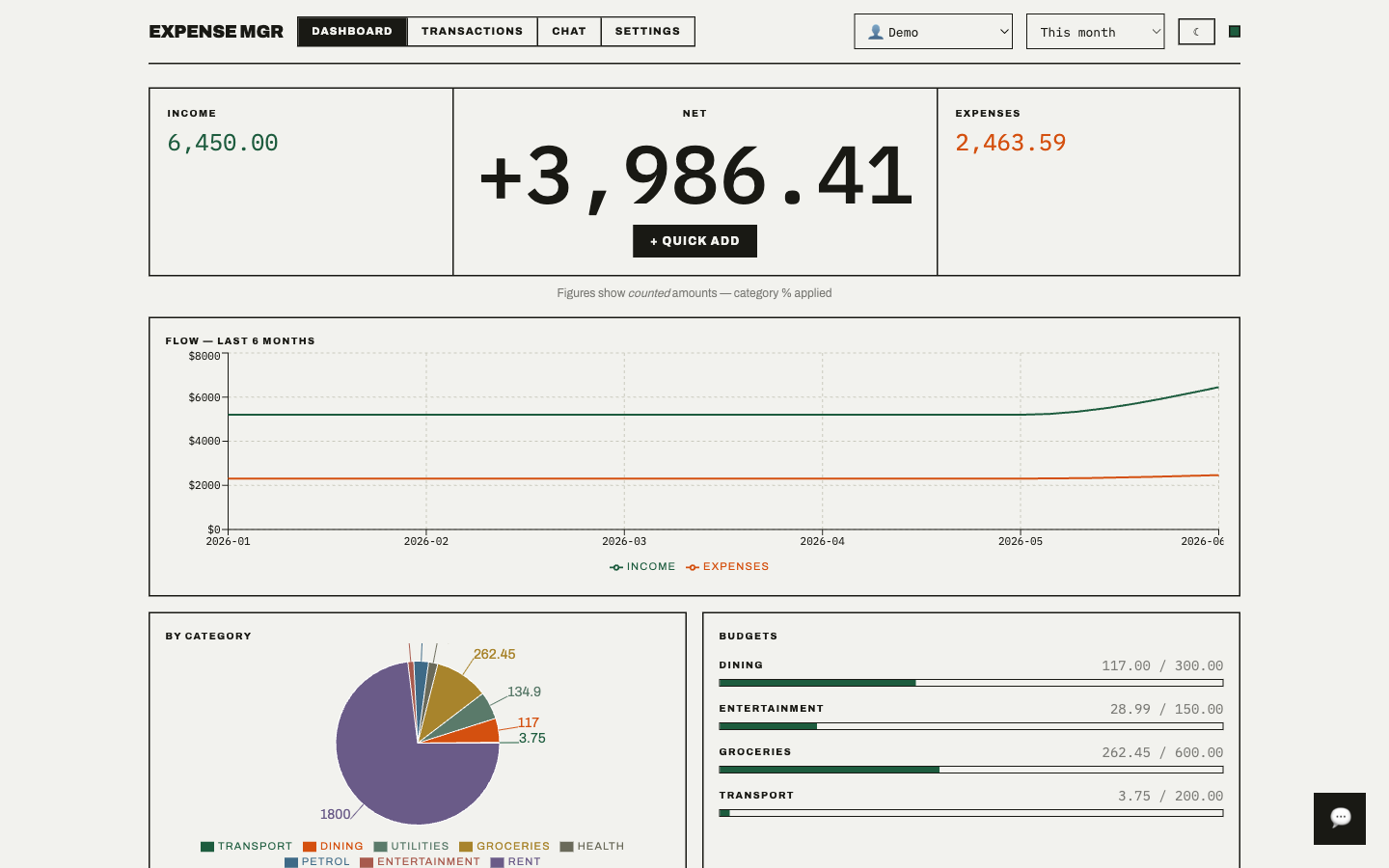
Local-first income & expense tracker driven by a Claude tool-calling agent — chat it, WhatsApp it, or snap a receipt. SQLite is the single source of truth; OCR and Google sync are opt-in.
The platform other Autodesk teams use to build and run AI agents and MCP servers — shared catalog, discovery, orchestration, and runtime. 3 agents, 5 MCP servers & 2 IDE plugins shipped.
One shared workflow from intent to ADRs, specs, implementation and docs, packaged as a plugin of skills and agents; agent monitoring with evals (quality) and Dynatrace APM (runtime); coaching on tactical vs. strategic programming.
Migrated 1,500+ internal apps off legacy, vulnerability-prone APIs to GraphQL across Python, Go, Java, Rails & Perl at >85% success. The AI works inside a controlled environment; deterministic checks decide what ships. Progress tracked in a UI dashboard.
Built Databook's data platform from scratch and its first semantic layer (early 2023) powering Databook AI — with agentic workflows in LangGraph & Google ADK.
A GPT product for strategic sales with multi-query & step-back retrieval, reranking, and LLM-as-judge to cut hallucinations and lift engagement.
Led the core Search team handling ~200K events/sec; architected a Data Lake/Warehouse for a global retailer, cutting storage costs.
A Scala rule engine that validates streaming and batch data against rules defined in YAML — data-quality enforcement for pipelines.
View on GitHub →More on github.com/samsandeepmalik
Professional Services expert onboarding customers to Cloudera Data Platform (public/private/hybrid); designed on-prem → AWS migrations and trained engineering teams.
Led a team of data engineers; built on-prem → AWS historical-data migration and refactored pipelines onto Databricks.
A decade of data & software engineering — 5G optimization, real-time trade-settlement pipelines, an in-memory data fabric, batch + real-time big-data over ~2 PB (Dubai), and enterprise platforms.
Master of Science in Computer Science — Manav Bharti University (2013).
Snowflake SnowPro Core · AWS Solutions Architect – Associate · AWS Cloud Practitioner · Databricks Spark 3.0 · CCA-175 · Microsoft AZ-900.
Building the harness around LLMs — agent runtimes, MCP, orchestration, evals, and guardrails for production-grade agentic systems.
Open to AI Architect, Principal and Staff roles in agentic AI. The fastest way to reach me:
CV in two formats — designed PDF for reading, or an ATS-friendly version for application systems.